N 00000001 A
Serial Numbers
Eleven characters decide whether your two is worth two dollars or twenty thousand. Here is how to read them.
N 00000000 A
Serial Number Lookup
Type the serial number as printed on the note. The checker reads the district from the first letter, flags a star, a low number, and the collected patterns, and shows what notes with that feature have brought in our sources, each with its type, grade, date, and source. It does not put a price on your note.
What Do the Numbers on a $2 Bill Mean?
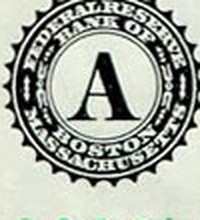
A modern $2 serial looks like L 13990150 A. The Bureau of Engraving and Printing explains the parts: the first letter "identifies the Federal Reserve Bank (FRB) which issued the note; since there are 12 FRBs, this letter is always between A and L." The eight digits count up within that district and series. "The last letter advances through the alphabet when all eight character serial numbers have been printed for a specific Federal Reserve Bank within the same series." O is never used because it looks like zero; Z is reserved for test printings. Modern runs stop at 96000000, so a note above that number does not exist. Every other marking on the face, from the plate position to what is inside the Treasury seal, is explained marker by marker.
Sources: BEP, Serial Numbers · USPaperMoney.info (96000000 limit)
Star Notes *
A star in place of the last letter means a replacement note. From the BEP: "When an imperfect sheet is detected during the manufacturing process after the serial number has been overprinted, it must be replaced with a new sheet. A 'star' sheet is used to replace the imperfect sheet. Reusing an exact serial number to replace an imperfect note is costly and time consuming. A 'star' note has its own special serial number followed by a star in place of a suffix letter."
Because stars are printed in small runs, they are the most common way a modern $2 becomes collectible. How small is small: Series 2003A printed 320,000 stars against 230,400,000 regular notes; Series 2009 printed 640,000 stars for two districts only; Series 2013 printed 5,248,000 stars over six years. Within Series 1976, three districts got just 640,000 stars each. The district-by-district counts are on the Collecting Guide, and the serial ranges for every star run are in the USPaperMoney.info tables, so you can check whether a "star note" for sale falls inside a real range.
Prices for a common 1976 star in uncirculated condition are modest; CoinWeek simply says "star notes: higher premiums." Scarcer district stars and star notes with low numbers are where the serious money is.
Sources: BEP, Serial Numbers · USPaperMoney.info $2 tables · CoinWeek
Which $2 Bill Serial Numbers Are Valuable?
Collectors have names for the patterns, and the auction house Stack's Bowers lays out the definitions. Examples below are theirs unless noted.
- Serial Number 1
- 00000001. "The ultimate prize." A Series 1976 $2 from San Francisco with this number sold for $21,150 at Heritage on January 8, 2016.
- Low Serial
- "Typically, four digits up to 00009999 and below to 00000001." The lower the number, the more collectors pay, and one sale shows the top end: Heritage sold a Series 2003 $2 with a low serial for $2,400 in July 2022. No source on this site gives a threshold where a premium begins, and one sale does not set one across series and grades.
- High Serial
- Numbers starting with four or more nines, 99990000 and up. Since modern notes stop at 96000000, true high serials are older notes or from uncut sheets.
- Ladder
- "The perfect ladder 12345678 and the perfect down ladder 87654321." Partial ladders like 10012345 are collected too; scrambled ladder digits are not.
- Radar
- "Notes that read the same forwards and backwards such as 13577531." A super radar has "six zeroes in the middle with matched ends such as 20000002."
- Repeater
- The first four digits repeated as the last four, like 74627462. A super repeater repeats two digits four times, "26262626."
- Solid
- Eight of the same digit. "The best being 88888888 and the ultimate solid prize being 99999999." Near-solids have five, six, or seven of the same digit. NBC Chicago, citing a dealer, put solids at roughly $1,000 to $4,000; that range is for solids on any denomination, and no $2 solid sale is in this site's sources.
- Binary
- Only two different digits in the whole number, like 74774774. True binaries use only ones and zeroes, "such as 01000001."
- Birthday or Date
- A number that reads as a date: 07041776 for the Declaration, or your own birthday. Value depends entirely on finding the one person who wants that date.
Sources: Stack's Bowers, "What's Your Fancy?" · MyCurrencyCollection, "Types and Values of Fancy Serial Numbers" · CoinWeek · NBC Chicago
Check Your Note in Sixty Seconds
Look for the Star
If the serial ends in a star instead of a letter, note the series year and the district letter, then look up that star run's serial range at USPaperMoney.info to see how big the run was.
Count the Leading Zeros
Three or more zeros at the front is interesting. Five or more is a real collectible. 00000001 is a phone call to an auction house.
Read It Backwards
Same number both ways is a radar. First half equals second half is a repeater. Only two digits used is a binary. All one digit is a solid.
Read It as a Date
MMDDYYYY or similar. Worth more to the right buyer than to the market.
Then Look at the Note, Not the Number
A fancy serial on a folded, dirty note is worth a fraction of the same number on a crisp one. Condition still rules.