H 00000001 A
History of the Two-Dollar Bill
Three eras, one portrait since 1869, a ten-year gap, and a comeback the Treasury insisted was permanent.
When Did the $2 Bill Come Out?
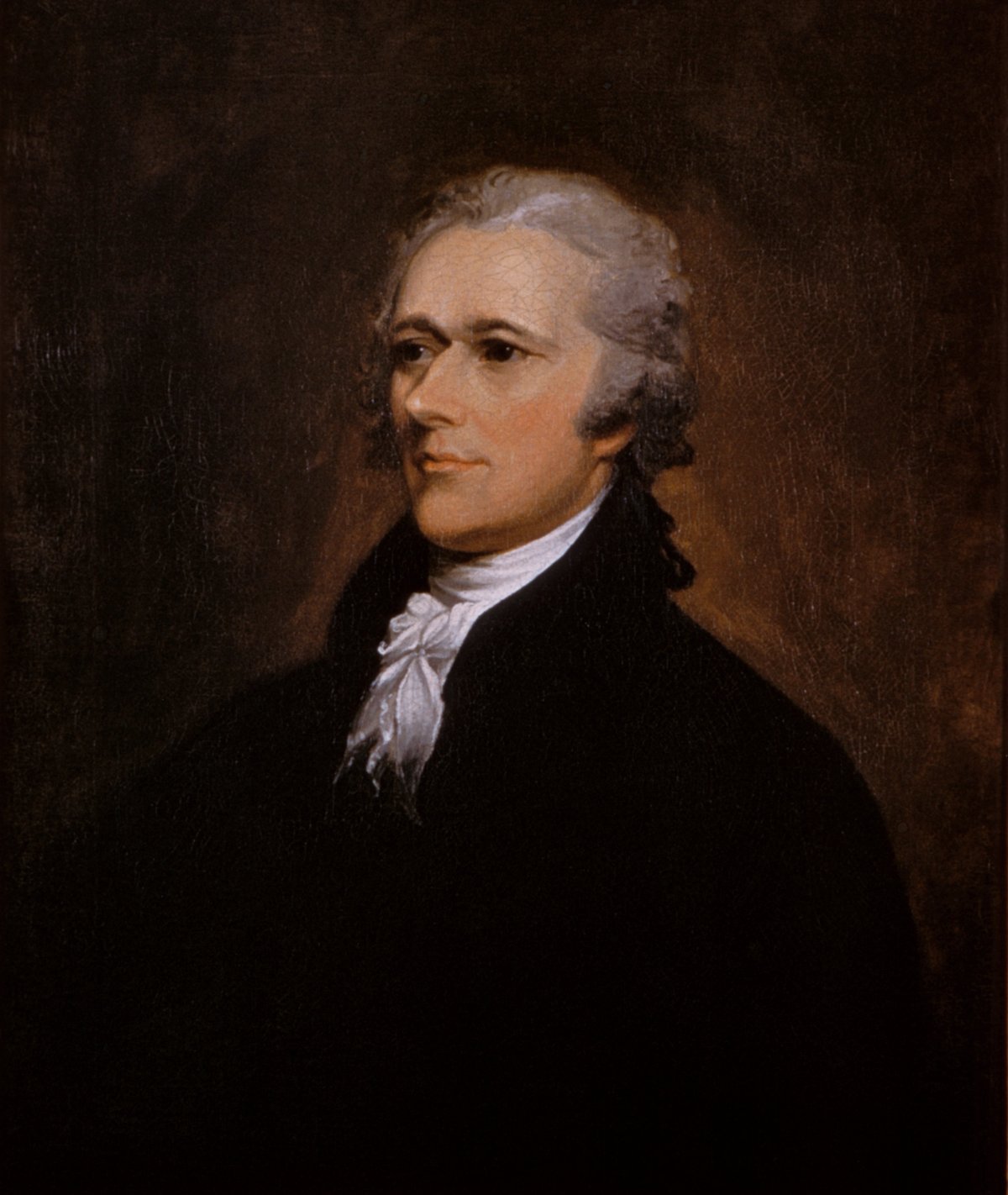
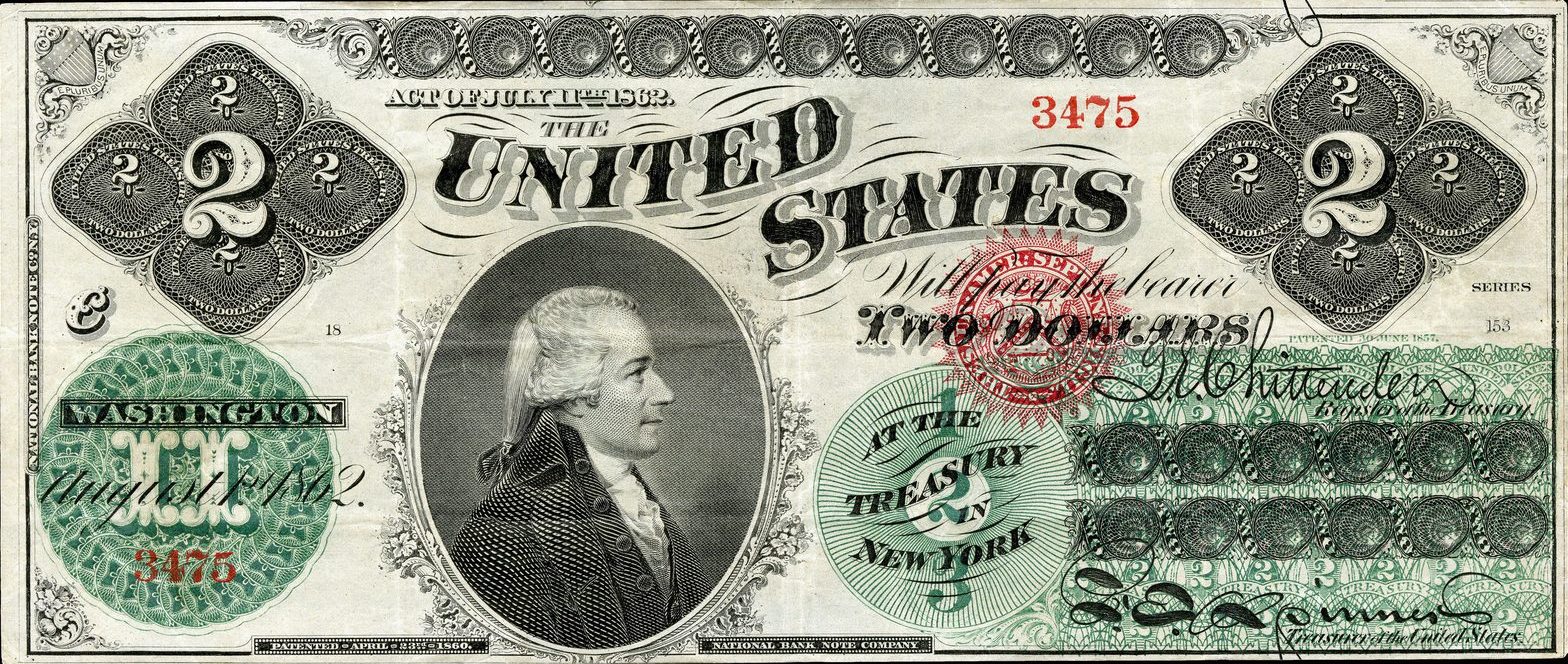
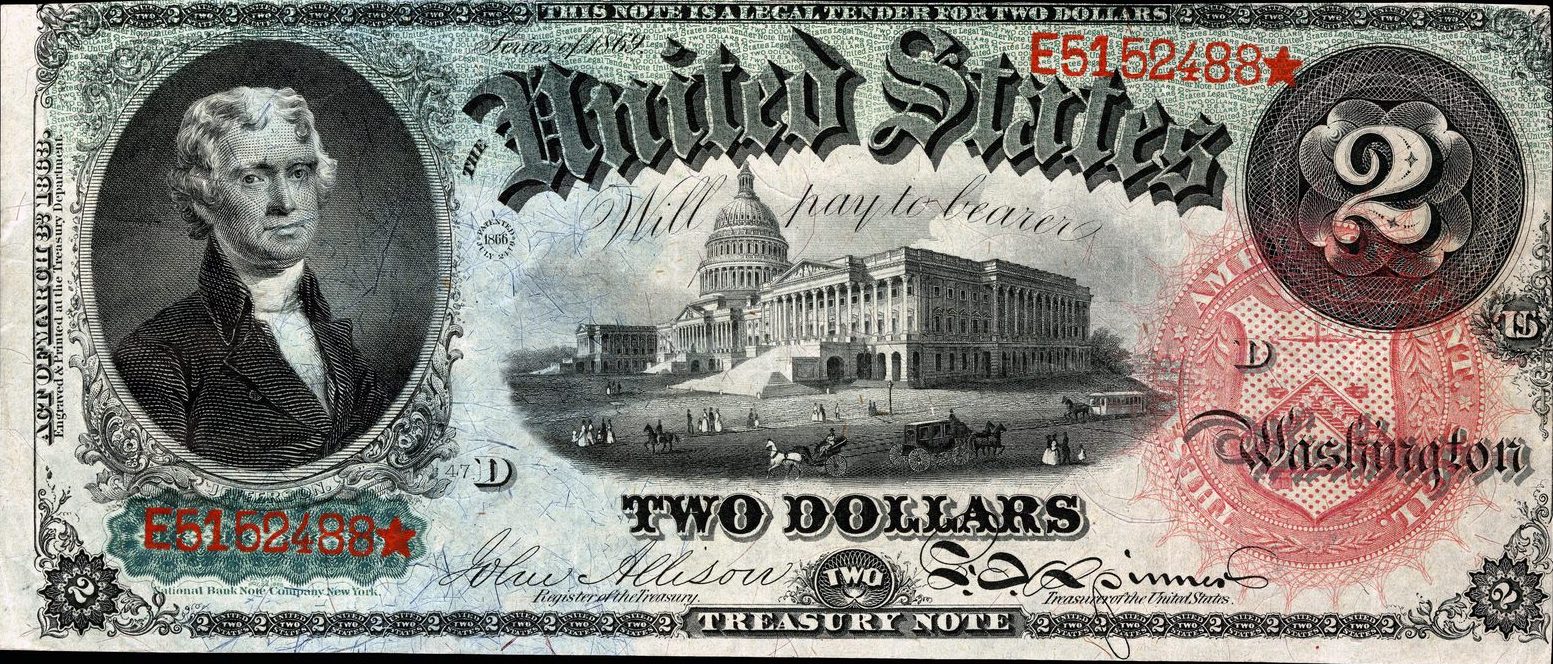
The federal government issued its first $2 notes in 1862, during the Civil War, with a portrait of Alexander Hamilton. It was not the country's first two: Continental, state bank, Texas, and Confederate twos had circulated for 87 years by then. Thomas Jefferson took over the face in Series 1869 and has never left it. For six decades the note was a large sheet of paper that came as a Legal Tender Note, a National Bank Note, a Silver Certificate, a Treasury Note, and a Federal Reserve Bank Note, with different backs and seal colors for each.
In 1928 the whole currency shrank to today's size and the $2 got Monticello, Jefferson's home, on its back. Low use finally caught up with it: the Treasury discontinued the denomination in August 1966, when it accounted for about one-third of one percent of currency outstanding. Ten years later it was back as a Federal Reserve Note with a new reverse, the signing of the Declaration of Independence, released on April 13, 1976, Jefferson's birthday. It has been printed, on and off, ever since.
Sources: Bureau of Engraving and Printing, $2 Note · Federal Reserve Bank of Richmond, "The $2 Bill Returns," Economic Review, March/April 1976 (PDF)
H 00000002 A
One Prologue, Three Eras
Before 1862
Continental to Confederate
Two-dollar notes issued by a Congress, a colony, a republic, thousands of banks, and a rebellion, for 87 years before the first federal $2.
1862 to 1918
The Large-Size Era
Hamilton, then Jefferson. Silver certificates, treasury notes, the Educational Series, and a battleship. Big paper, red and blue and brown seals.
1928 to 1966
The Red Seal Era
Today's dimensions, a red seal, and Monticello on the back. Production dwindled until the Treasury dropped the denomination in 1966.
1976 to Today
The Modern Bill
A green-seal Federal Reserve Note with the Declaration of Independence on the back, announced in 1975 and still in production.
One Portrait, Many Notes
The Bureau of Engraving and Printing puts it plainly: "The first use of Thomas Jefferson's portrait on $2 notes was on Series 1869 United States Notes. The same portrait has been used for all series of $2 United States Notes as well as for all $2 Federal Reserve notes." The engraving is based on Gilbert Stuart's early-1800s portrait of Jefferson.
Other faces did appear on $2 notes that were not United States Notes: General Winfield Scott Hancock on the 1886 Silver Certificate, Treasury Secretary William Windom on the 1891 Silver Certificate, General James B. McPherson on the 1890 and 1891 Treasury Notes, and George Washington on the 1899 Silver Certificate. When the currency shrank in 1928, only Jefferson survived.
Sources: BEP, $2 Note · Richmond Fed, "The $2 Bill Returns," Table I