W 00000001 A
Clemson, Woz, and Pop Culture
The people who decided the two was theirs.
The Clemson Tiger Paw Two
Clemson University tells it in one paragraph on its traditions page: "In 1977, Georgia Tech decided to stop playing football against Clemson. In a show of protest, students and alumni stamped $2 bills with Tiger Paws and used them in Atlanta to illustrate the money Tiger fans spent at athletic events." Fans still carry them to away games for the same reason.
The details, from WBUR's 2019 history: the idea came from George Bennett, Clemson class of 1955 and executive secretary of the IPTAY booster club, after Georgia Tech dropped the series in favor of William & Mary. The last scheduled game was September 24, 1977. Bennett's reasoning was that "nobody was using the $2 bill at all. That was the whole deal, was to do something that was unusual." He bought an orange ink pad and a custom tiger paw stamp, and on December 30, 1977, at the Gator Bowl against Pittsburgh, the stamped bills went out in force. Georgia Tech joined the ACC and the series resumed in 1983; the bills never stopped. A Clemson bank now hands out ink pads and paw stamps with withdrawal slips, and one longtime fan threw about $200 worth into the crowd at the 2014 Citrus Bowl.
Sources: Clemson University, Traditions · WBUR Only A Game, "The Legend Of The Clemson $2 Bill," August 30, 2019
Steve Wozniak's Perforated Pads
The Apple co-founder has carried gag $2 bills for decades, and the details in the numismatic newsletter The E-Sylum are the real ones. He buys sheets of $2 notes from the Bureau of Engraving and Printing in the 4, 16, and 32-note sizes; "the $2 bills cost nearly $3 each when purchased on sheets." A printer he found through friends gums the four-note sheets into pads like stationery and perforates between the notes so he can tear one off. He describes the whole thing as "just for comedy."
The comedy nearly went wrong in Las Vegas. After he tipped a casino waitress with two perforated notes from a pad, the Secret Service approached and read him his rights. Asked for identification, he handed over a joke ID he had made on a dye-sublimation printer: it named him a "Laser Safety Officer" and showed him wearing an eyepatch. The agent looked at it and gave it back. The notes are genuine currency, and the Bureau sold them to him.
Source: The E-Sylum, "Steve Wozniak's Perforated Pads of $2 Bills," Vol. 18 No. 36, September 6, 2015
The Dallas Club That Emptied the Fed
If you have wondered why the two is the unofficial currency of gentlemen's clubs, the answer has a name. Duncan Burch, owner of several clubs in the Dallas and Fort Worth area, is credited with pioneering the practice of making change in $2 bills so that customers tip more, on the theory that people do not treat a two as real money. The practice began at his Baby Dolls in Dallas around 1992; the account says he "emptied the Dallas Federal Reserve Bank" of twos when he started, and he spread the idea through industry panels. The article, originally published in the magazine $pread in 2007, points to Federal Reserve data showing $2 bill orders of $92 million in 2001 and $122 million in 2005, more than double the average of the 1990s.
Source: Utne Reader, "The Two-Dollar Dance," September 2007, reprinted from $pread, Spring 2007
Change at Monticello
Jefferson's house in Charlottesville, Virginia was on the back of the $2 from 1928 to 1966, and Jefferson has been on the front since 1869. Visitors to Monticello regularly report that the gift shop and ticket counter hand out $2 bills in change, and occasionally that the shop is out because the bank did not get any. It is the most on-brand cash drawer in America.
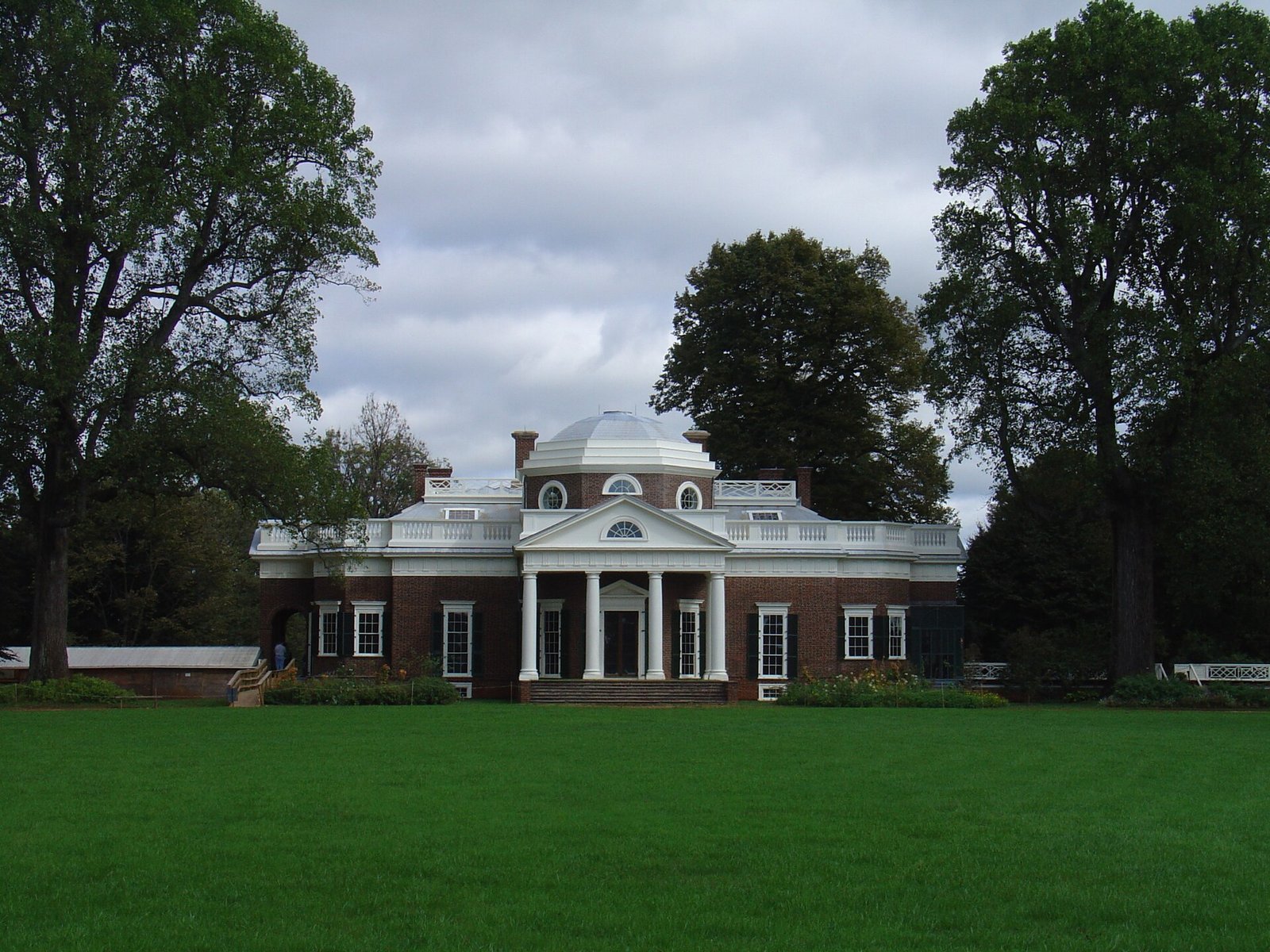
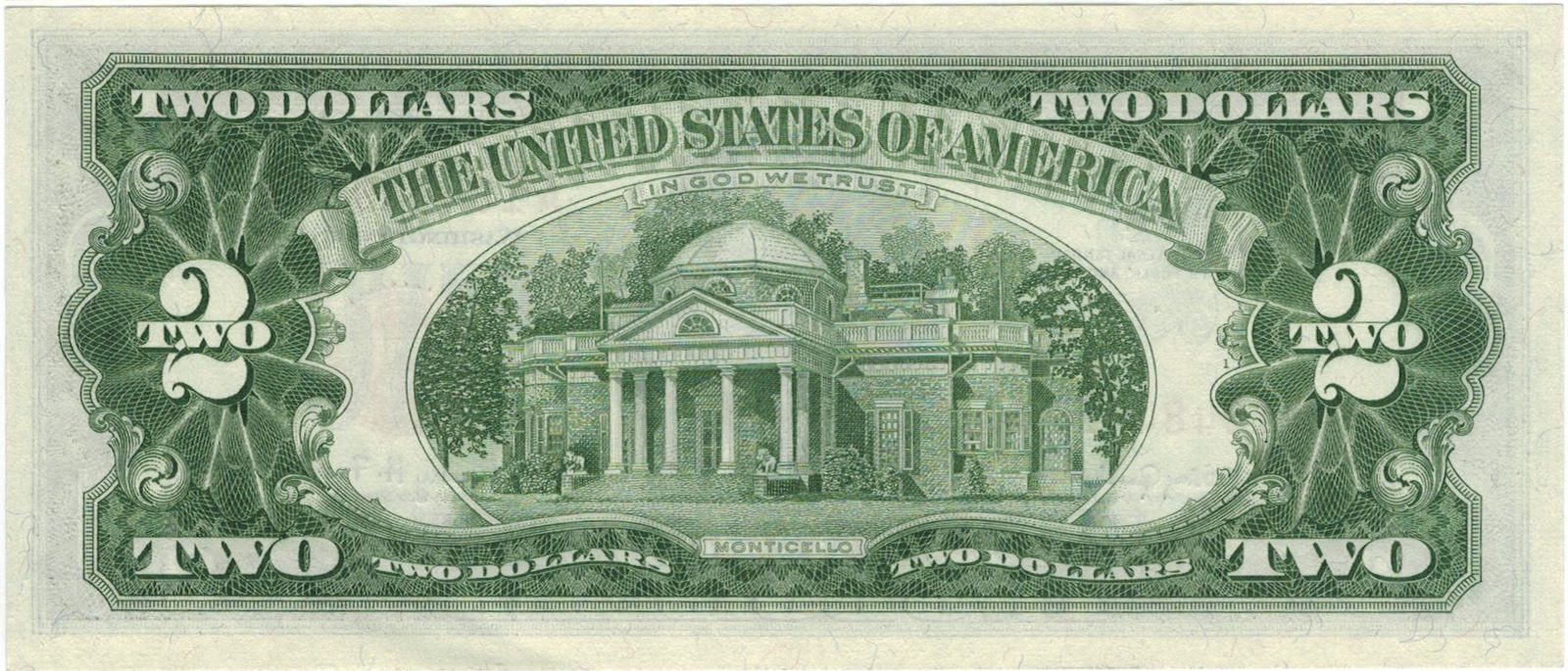
Source: visitor reports, for example "2 dollar bills in the gift shop!" on Tripadvisor. Monticello on the note: BEP.
Arrested for Paying in Twos
The urban legend about the clerk who thinks $2 bills are fake came true in Lutherville, Maryland on February 20, 2005. Mike Bolesta, 57, who ran a student tour company, paid a disputed $114 installation fee at a Best Buy with 57 new $2 bills. The cashier marked each one with a pen and said, "I don't have to take these if I don't want to." Police noted the sequential serial numbers and smeared ink, handcuffed him in front of other customers, took him to the county lockup, and chained him to a pole in leg irons. A Secret Service agent, Leigh Turner, examined the bills, confirmed they were genuine, and he was released without charges. Bolesta's summary: "Humiliating. I am 6 feet 5 inches tall, and I felt like 8 inches high."
Twenty years later it still happens at the register. In February 2025 a Wurtsboro, New York man told the New York Post that two young cashiers at an Aldi in Monticello, New York refused his $2 bills as counterfeit without checking them. And in 1998 a Philadelphia cashier gave CBS News the retail view in four words: "People don't want them."
Sources: The Baltimore Sun, Michael Olesker, "A tale of customer service, justice and currency as funny as a $2 bill," March 8, 2005 · New York Post via Yahoo, February 2, 2025 · CBS News, "Whatever happened to the $2 bill," September 29, 1998
The Documentary
"The Two Dollar Bill Documentary" is a 103-minute feature directed by John Bennardo, released October 19, 2015 and shot in a dozen states over a year. Bennardo started with a small stack of twos in a desk drawer and the observation that "most Americans are decidedly misinformed about the $2 bill." It is available to rent or buy on Prime Video, and a slightly modified version is free on the film's YouTube channel.
You will not find the two in "Pulp Fiction" or "Cheers." Those get repeated online, and this site could not verify either scene, so they are not claimed here.
Sources: The Two Dollar Bill Documentary, About · IMDb